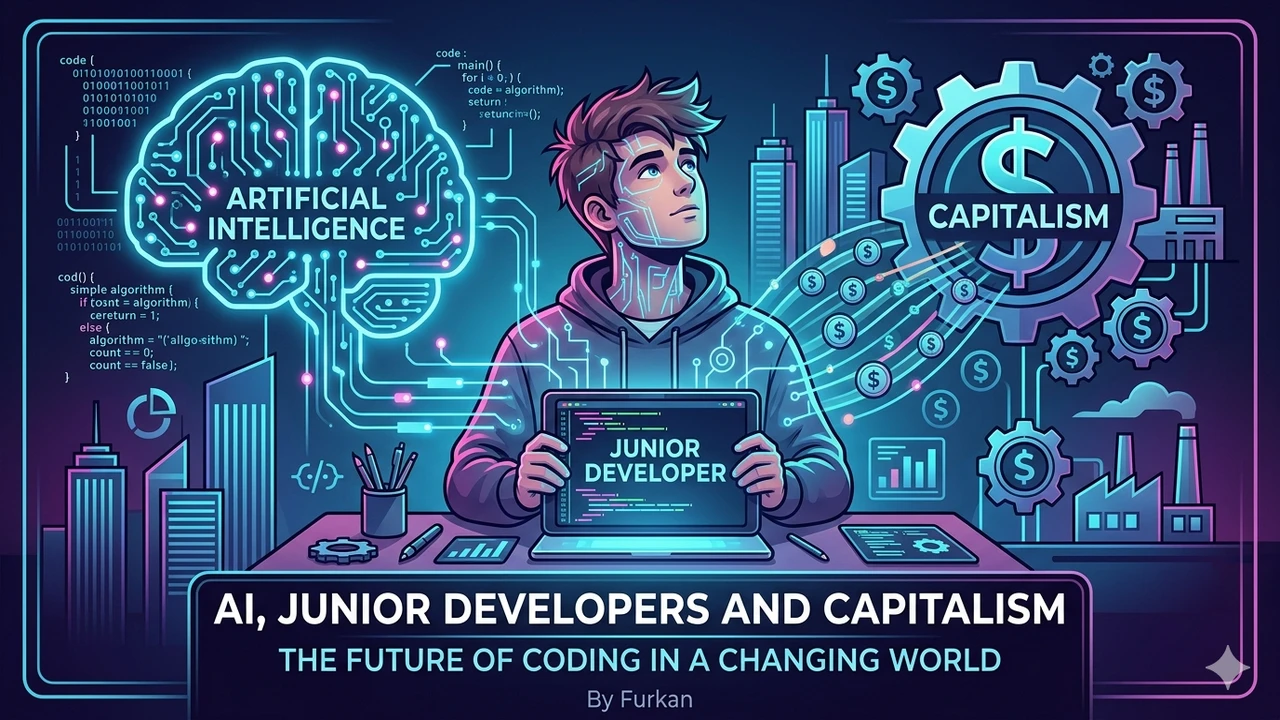
Let me be clear upfront: these are my personal thoughts. None of this is absolute fact, and everyone's perspective will differ. AI has forcefully entered our lives, and we feel compelled to use it. Some of us use it for a productivity boost, some for self-improvement, and others just use it to churn out and share AI slop and brainrot. For this post, I am focusing strictly on the software engineering side.
The Junior Developer Dilemma
Historically, fresh graduates entered the industry as junior developers. They wrote code under the guidance of mentors—usually mid-level or senior engineers. Those seniors would then review the code, provide feedback, request adjustments, and eventually deploy it. Now, the paradigm has shifted. AI writes the code. The mid-level or senior developer reviews it and deploys it. In many workflows, the junior developer's core task has been entirely hijacked by artificial intelligence. Because of this, junior hiring has ground to a halt. I believe companies are operating on one of two assumptions: either they genuinely think they no longer need juniors, or they are in a "wait-and-see" holding pattern, pausing recruitment to see where the industry settles. If you ask me, the industry will always need juniors. Why? Because the junior of today is the mid-level or senior of tomorrow. A senior developer doesn’t just know how to write code; they possess critical, company-specific know-how and domain knowledge. A junior must learn these things to progress. Think about the long-term consequences: Companies have stopped hiring. What happens when their current mid-level and senior developers leave for better offers? If there are no trained juniors ready to step up, those companies are heading for incredibly dark days.
The Illusion of the AI "Context Window"
During my most recent job change, my company had already integrated AI into their development process. Yet, they were still very upset about my departure. The reason? They were going to lose the "Furkan comfort." Yes, they had AI. But I could anticipate problems before they happened and take proactive measures. I had so much domain knowledge that even if they wanted to extract my entire mental context window and upload it to an AI, there was no one capable of doing it. Before I left, I documented everything I knew and even hooked up a chatbot to those documents for them. But the truth is, I don't even know my own know-how well enough to dump it all into a file in a week or two. The reasoning behind specific technical decisions is often tied to past incidents, and I might not recall them until a similar situation arises. The takeaway? Documentation alone doesn't work. What is an AI supposed to do without the unwritten human context? Eventually, companies must regulate and train the younger generation as their veterans retire or move on, otherwise, they will be left stranded.
The Capitalism Factor
There is also the capitalist reality to consider. Capitalism cannot survive without consumers. If everyday people cannot work to earn money, they cannot spend money, and the wheels of the capitalist machine stop turning. Furthermore, a massive population of unemployed people carries the risk of organization and rebellion. Capitalism will not allow a technology to destroy it. Therefore, while hiring might be frozen right now, recruitment will resume once the market realizes that AI cannot run the show entirely on its own. It just might not return to the inflated levels we saw previously. I firmly believe that the software industry grew uncontrollably during the pandemic. What we are experiencing now is simply a market correction. It is returning to normal.
Will AI Eventually Take Our Jobs?
Do I think AI will one day take our jobs entirely? Yes. I am certain that one day, it will completely replace us. However, I don't think it will happen anytime soon. We are years away from the technology reaching that level of autonomy. And even when that year comes, and the technology is ready, there will be significant pushback from capitalist structures delaying the inevitable.
How to Survive as a Developer Today
If you are trying to break into the industry right now, my advice is blunt: you have to work relentlessly.
- Gain experience early: If you are a student, get your experience now. You have to eliminate your competition before you even graduate.
- Build a real portfolio: If you are a graduate or a self-taught developer like me, fill your portfolio with broad, meaningful projects. Stop building generic clones.
- Network aggressively: Networking is vital. For HR and companies, every interview is a loss of time and money. Referrals are a valuable cost-saving tool for them. Building a network is exactly why I actively use X (Twitter).
Beyond the Code: The Rise of the "Product Engineer"
In the age of AI, technical skill is becoming the baseline, not the differentiator. If you want to be irreplaceable, you must move beyond just "writing code" and become a Product Engineer. This requires two critical skills that AI currently lacks:
- Mastering Communication (The "Translator" Skill): It’s not enough to understand a programming language; you must understand your customer’s language. Whether it’s a client, a boss, or another department, you need to grasp what they actually need versus what they say they want. Your job is to explain technical constraints in a way that aligns with business goals.
- Strategic Foresight and Pattern Recognition: AI is excellent at following existing patterns, but it cannot predict future consequences. A seasoned developer looks at a piece of code and sees the potential technical debt six months down the line. Being able to connect the dots and anticipate risks before they happen is what saves companies from disaster.
In short: AI knows "how" to write code, but it doesn't know "why" we are writing it. Focus on understanding the why, and you will always have a seat at the table.
And as a final side note: I am completely against trying to find a job through LinkedIn.